How STADLER Is Transforming Knowledge Work at a 230-Year-Old Company With ChatGPT
The Swiss rail vehicle manufacturer's deployment of ChatGPT Enterprise across 650 employees offers a case study in how legacy industrial companies can integrate AI into knowledge workflows without the organisational disruption that typically derails enterprise AI rollouts.

D.O.T.S AI Newsroom
AI News Desk
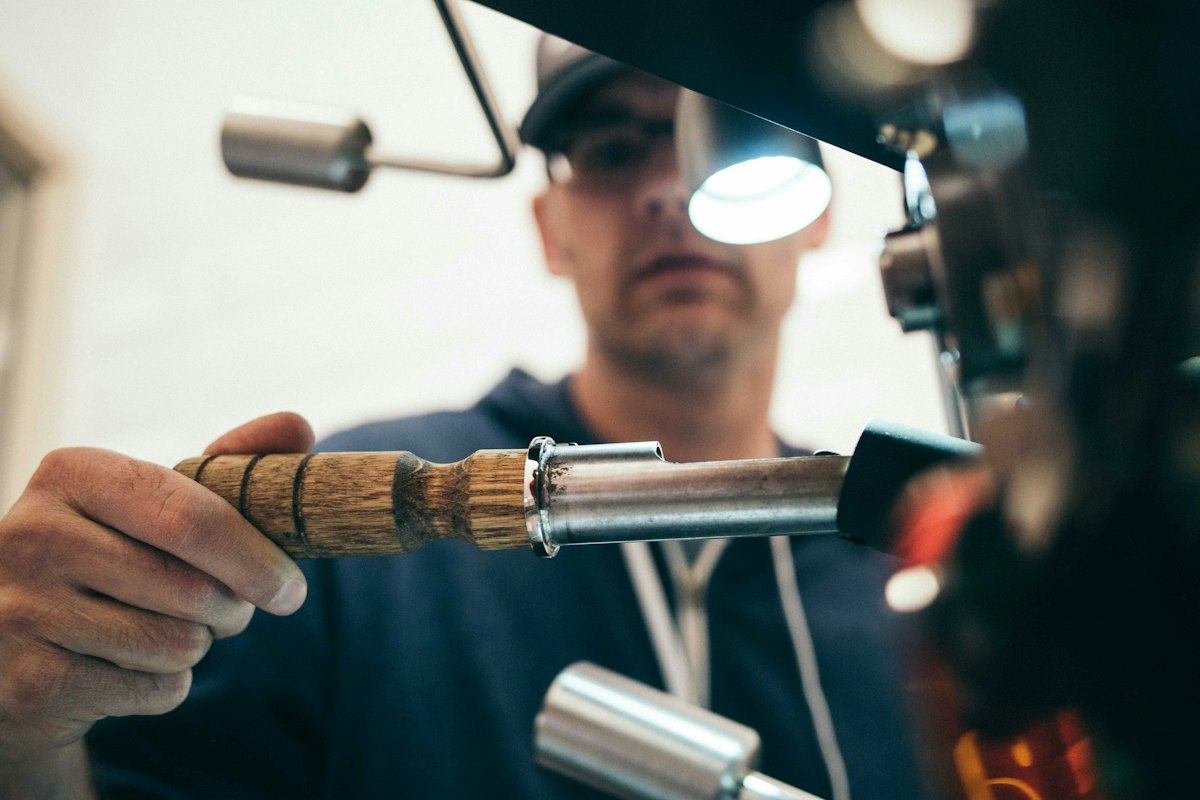
STADLER, the Swiss rail vehicle manufacturer founded in 1942 and tracing its corporate lineage to operations dating back to the 1790s, has completed a company-wide ChatGPT Enterprise deployment covering 650 knowledge workers across engineering, procurement, documentation, and project management functions. The rollout, detailed in a case study published by OpenAI, offers a practical counterpoint to the enterprise AI narrative that has been dominated by fintech, software, and professional services firms.
What STADLER Built
The deployment centred on three primary use cases: technical documentation generation, supplier communication drafting, and internal knowledge retrieval. STADLER's engineering processes are documentation-intensive — each rail vehicle project generates thousands of pages of specifications, test reports, and compliance documents, much of it governed by stringent European rail safety standards.
Engineers previously spent an estimated 30–40% of project time on documentation-adjacent tasks. With ChatGPT integrated into their existing workflows via custom GPTs trained on STADLER's internal specification libraries and quality frameworks, that ratio has shifted materially. The company reports average time savings of approximately 2.5 hours per employee per week on documentation tasks alone — a figure that, across 650 employees, represents over 1,600 hours of recovered capacity weekly.
The Implementation Approach
What distinguishes STADLER's rollout from many enterprise AI stories is the deliberate, bottom-up adoption model. Rather than mandating tools from the top, the company ran an 8-week pilot with 45 volunteers across functions, documented specific use cases where AI delivered measurable improvement, and built internal champions before the broader rollout. Change management investment was explicitly budgeted alongside the technology spend.
The company also addressed the trust problem directly: all AI-generated documentation is flagged as AI-assisted and passes through the same human review process as manually drafted content. This preserved existing quality assurance workflows while allowing the speed and throughput benefits of AI generation.
The Industrial AI Opportunity
STADLER's case matters beyond its immediate context because it demonstrates that the enterprise AI productivity thesis applies to industries with complex regulatory environments and strong institutional resistance to workflow disruption. Rail manufacturing, with its certification requirements, safety oversight, and multi-decade project timelines, is not an obvious early adopter of LLM tooling.
If the model works there, it is a reasonable template for similarly documentation-heavy sectors — aerospace, energy, heavy manufacturing, public infrastructure — where the productivity unlocks are potentially enormous but the implementation barriers are real. The unsexy lesson from STADLER is that adoption methodology matters as much as the technology itself.