Nvidia Sets New MLPerf Records With 288 GPUs as AMD and Intel Fight on Different Battlegrounds
Nvidia has shattered MLPerf inference records using a system configuration of 288 Blackwell GPUs, establishing new peaks across multiple AI workload categories. Meanwhile AMD and Intel chose to emphasize different metrics — a telling divergence that reveals how each company thinks about where the real AI infrastructure competition is.

D.O.T.S AI Newsroom
AI News Desk
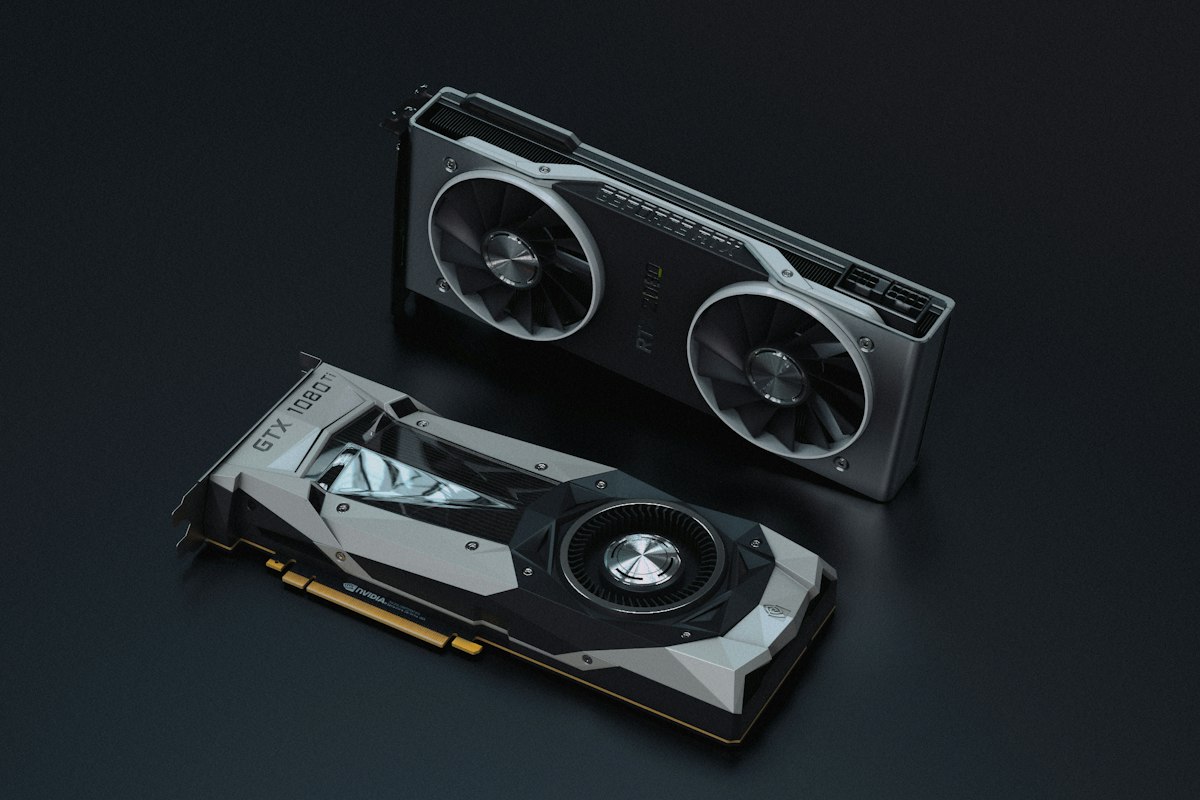
Nvidia has posted new top scores in the latest round of MLPerf Inference benchmarks, using a configuration of 288 Blackwell GPUs to set records across multiple AI workload categories. The results, reported by The Decoder, reinforce Nvidia's continued dominance in raw AI inference throughput — but the more interesting story is what AMD and Intel chose to do instead.
Nvidia's Numbers
The 288-GPU Blackwell configuration represents a hyperscale deployment scenario rather than a typical enterprise purchase, but MLPerf submissions at this scale serve a clear purpose: they demonstrate the ceiling of what Nvidia's architecture can deliver and provide data center operators with performance projections for large-scale inference clusters.
The latest MLPerf round also introduced new workload categories — including multimodal and video model inference benchmarks — reflecting the shift in production AI from text-only LLMs toward multimodal systems. Nvidia's results span the new categories as well as the established text and image workloads, suggesting the Blackwell architecture's flexibility across modalities.
AMD and Intel's Strategic Choice
AMD and Intel both participated in the benchmark round but chose to emphasize different dimensions of performance rather than competing head-to-head on peak throughput. This is a meaningful signal: direct raw throughput competition with Nvidia on its own terms is not currently winnable at the high end, so both challengers are instead building credibility in specific niches — energy efficiency, cost-per-token at moderate scale, and integration with non-GPU accelerators.
AMD's ROCm-based submissions highlighted performance-per-watt metrics and inference efficiency on the MI300X at deployment scales more relevant to enterprise buyers than hyperscalers. Intel's results focused on Gaudi 3 performance in cost-sensitive inference scenarios.
What MLPerf Tells the Market
MLPerf benchmarks are imperfect proxies for real-world AI infrastructure decisions — actual workload characteristics, memory bandwidth requirements, and software stack maturity all matter as much as peak throughput. But the divergent strategies on display in this round reveal something genuine: Nvidia is playing to extend its peak performance lead while AMD and Intel are quietly making the case that the vast middle of the enterprise AI market doesn't need that peak — and can be served at lower cost by architectures optimized for efficiency over absolute throughput.
That is a rational competitive strategy, and one that may prove durable as AI inference becomes a volume commodity workload rather than a specialized capability.