Nebius Is Building One of Europe's Largest AI Factories in Finland — 310MW of Compute to Rival US Scale
Nebius, the AI cloud infrastructure company spun out of Yandex, is building a 310-megawatt AI compute facility in Finland that will rank among the largest in Europe. The project positions Finland — and by extension the EU — with a domestic AI training and inference cluster that begins to approach the scale of comparable US infrastructure.

D.O.T.S AI Newsroom
AI News Desk
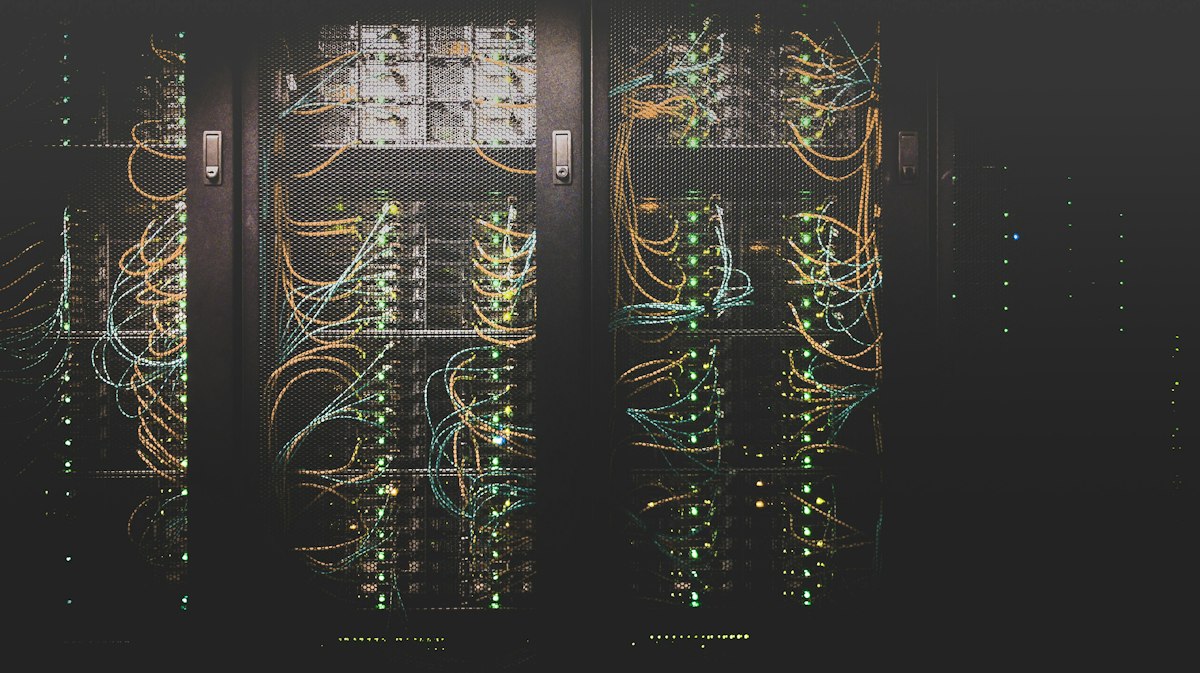
Nebius has announced plans to build a 310-megawatt AI compute facility in Finland, one of the largest AI infrastructure projects in European history. The facility will be purpose-built for AI training and inference workloads, equipped with the high-density GPU clusters and specialized networking that frontier model training requires — infrastructure that, until recently, existed at meaningful scale only in the United States and, to a lesser degree, China.
Who Is Nebius
Nebius is not a household name outside of AI infrastructure circles, but its origin story is significant. The company was spun out of Yandex — Russia's dominant internet company — following the geopolitical restructuring that followed Russia's 2022 invasion of Ukraine. Yandex divested its international assets, and Nebius emerged as an independent company headquartered in Amsterdam, inheriting the technical DNA of one of Europe's most sophisticated engineering organizations while establishing clear organizational separation from its Russian predecessors.
Nebius has since positioned itself as an AI cloud infrastructure provider competing with AWS, Google Cloud, and Azure for the AI training and inference workloads that are consuming the most compute capacity globally. Its differentiator is focus: where the hyperscalers offer AI compute as one product category among dozens, Nebius is exclusively an AI compute company, which shapes its hardware selection, network architecture, and operational optimization toward the specific demands of GPU-accelerated AI workloads.
Why Finland
The site selection reflects a set of practical advantages that have made the Nordic countries increasingly attractive for large-scale compute infrastructure. Finland's electricity grid runs on a high share of renewable generation — hydro, wind, and nuclear — which gives power-intensive AI facilities access to low-carbon electricity at competitive prices. The country's average ambient temperature reduces cooling costs substantially compared to warmer climates. And Finland's political stability, EU membership, and rule of law provide the regulatory predictability that a decade-long infrastructure investment requires.
The 310MW power draw of the planned facility is the number that contextualizes its significance. Most existing European data centers operate in the 10-50MW range. A 310MW AI-specific facility represents a step change in European AI compute capacity, bringing a single site to roughly the scale of the clusters that OpenAI, Google DeepMind, and Anthropic use for frontier model training.
Europe's AI Infrastructure Gap
The Nebius announcement arrives as European policymakers have grown increasingly vocal about the continent's dependence on US and Asian AI infrastructure. Training a frontier model requires access to large-scale GPU clusters; without domestic infrastructure at that scale, European AI research institutions and companies face a structural dependency on American cloud providers. Projects like the Nebius Finland facility — alongside France's Scaleway expansion and Germany's supercomputing investments — represent Europe's early attempts to close that gap. Whether 310MW is enough to matter at the scale of modern frontier model training is an open question, but it marks a credible beginning.