Intel and Google Close an AI Infrastructure Partnership — Intel's Biggest Vote of Confidence in Years
Intel has secured a significant AI infrastructure partnership with Google, in a deal that provides the beleaguered chipmaker with a high-profile customer win and signals that the competitive landscape for AI silicon is expanding beyond NVIDIA's near-monopoly position.

D.O.T.S AI Newsroom
AI News Desk
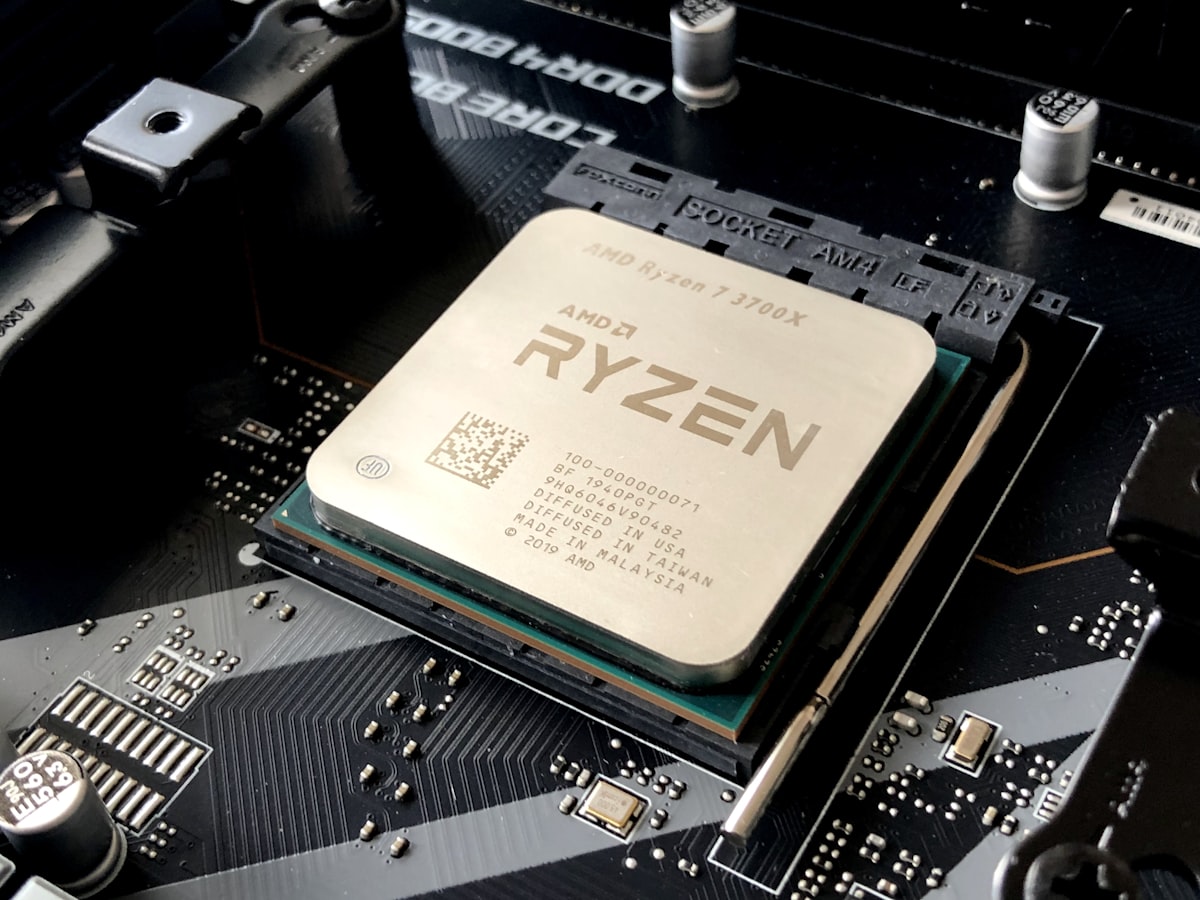
Intel and Google have finalized an AI infrastructure partnership that positions Intel silicon within Google's AI compute stack, according to AI Business reporting. The deal is significant on multiple levels: it provides Intel with a credibility-restoring enterprise win at a moment when the company has faced sustained pressure from NVIDIA's dominance of the AI training market, and it signals Google's strategic interest in diversifying its silicon supply chain beyond any single vendor dependency.
Intel's AI Inflection Point
Intel has spent the better part of three years attempting to establish its Gaudi AI accelerator line as a viable alternative to NVIDIA's H100 and H200 GPUs. The effort has faced an uphill battle: NVIDIA's CUDA ecosystem represents a decade of developer tooling, library support, and workflow integration that cannot be replicated quickly. But the Google deal suggests that at sufficient scale and price point, NVIDIA alternatives can win enterprise adoption — particularly from hyperscalers that have both the engineering resources to adapt workloads and the procurement leverage to extract favorable terms.
For Intel CEO Lip-Bu Tan, who returned to the company in early 2025 to execute a turnaround, the Google partnership is a meaningful data point that the Gaudi strategy is producing commercial traction. Intel's AI datacenter revenue has lagged badly behind NVIDIA's, and the company has faced questions about whether Gaudi can achieve the scale necessary to sustain the investment required for competitive next-generation development.
Google's Supply Chain Logic
From Google's perspective, the deal reflects a supply chain diversification strategy that has been visible in its infrastructure decisions for several years. Google has invested heavily in custom silicon — the TPU (Tensor Processing Unit) line — precisely to reduce its dependence on merchant silicon vendors. Partnering with Intel for specific AI infrastructure workloads extends this logic: rather than single-sourcing GPU capacity from NVIDIA, Google is building a heterogeneous compute environment that distributes risk and creates negotiating leverage.
The partnership's specific workload allocation has not been publicly detailed. Google operates one of the most complex and heterogeneous AI infrastructure stacks in the world, with TPUs, NVIDIA GPUs, and now Intel Gaudi accelerators each serving different use cases based on price-performance characteristics. The Intel deal is likely to target workloads where Gaudi's cost profile offers an advantage over H100/H200 — inference at scale being the most probable candidate, given that training workloads have historically been NVIDIA's strongest use case.
Competitive Signal for the Market
The Intel-Google announcement arrives alongside AMD's continued push with its MI300X accelerators and a growing cohort of custom AI chip startups. The signal for the market is that NVIDIA's grip on AI infrastructure, while still dominant, is loosening at the margins. Hyperscalers have both the incentive and the technical capability to adopt alternatives, and that adoption creates the commercial foundation necessary for alternatives to mature and improve. The competitive dynamics of AI silicon are, slowly, normalizing.