Humanoid Robots Outrun Humans at Beijing's Second Robot Half Marathon
At Beijing's second annual robot half marathon, humanoid robots from multiple Chinese manufacturers completed the 21-kilometer course ahead of human runners — a milestone that would have seemed like science fiction two years ago. The event signals how rapidly Chinese robotics has advanced from laboratory demonstrations to physical endurance capability that surpasses human athletic performance.

D.O.T.S AI Newsroom
AI News Desk
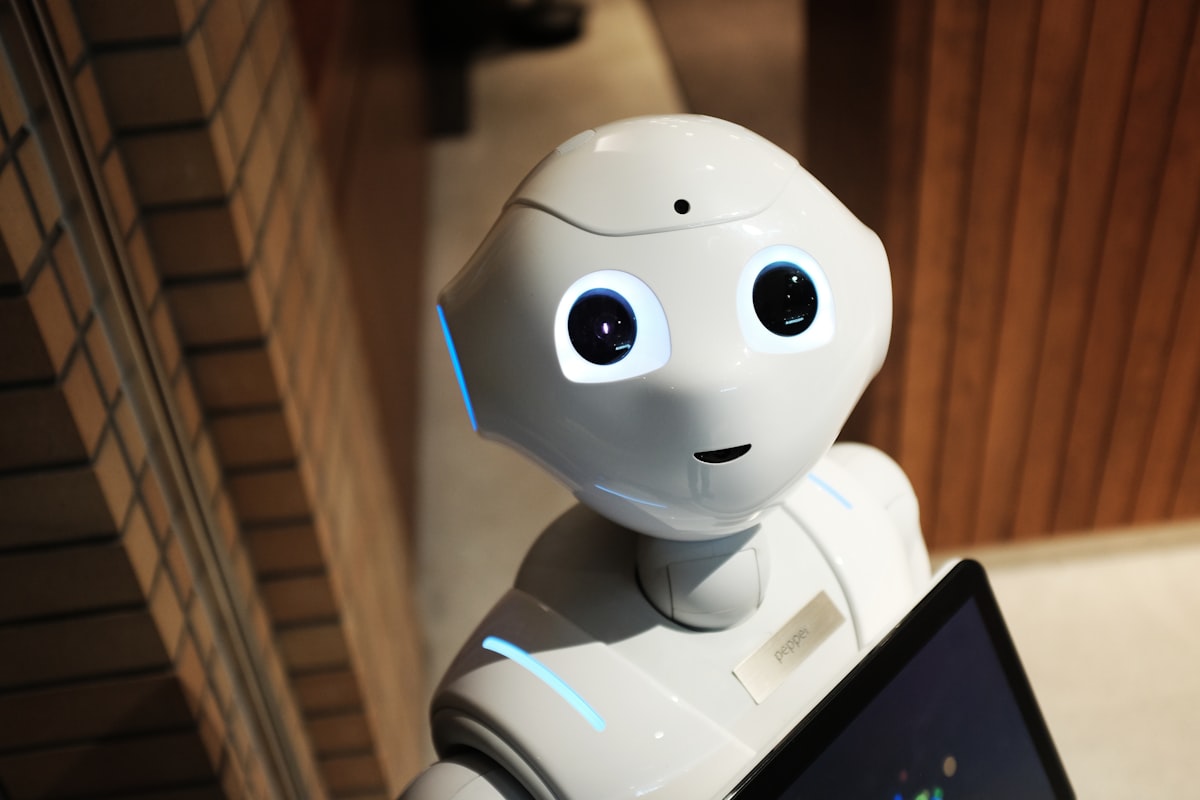
Humanoid robots completed Beijing's second annual robot half marathon ahead of human runners in the same event, according to reporting by The Decoder. The race, organized as a showcase for China's domestic robotics industry, featured bipedal humanoid robots from multiple Chinese manufacturers competing over a 21-kilometer course alongside human participants. The winning robot finished the course in a time that placed it ahead of the median human runner in the parallel human division — not a world record, but an extraordinary milestone for physical AI systems whose walking stability and energy efficiency were considered deeply inadequate for sustained locomotion just two years ago.
How Humanoid Locomotion Has Advanced This Fast
The speed of progress in humanoid robot locomotion has surprised even experts who follow the field closely. The key advances that made competitive half-marathon performance possible are layered: improved gait algorithms that allow robots to dynamically adjust stride in response to surface variation, battery and power management systems with sufficient energy density to sustain high-intensity locomotion for 21 kilometers, and mechanical engineering improvements in joint durability that prevent the degradation under load that caused early bipedal systems to fail long before completing endurance challenges. Chinese manufacturers including Unitree Robotics and others have also benefited from the rapid iteration cycles that their production scale enables — the ability to test thousands of hardware configurations over compressed timescales has accelerated learning in a way that lab-focused Western robotics programs have not matched.
China's Robotics Acceleration
The Beijing half marathon is a deliberate showcase of national industrial capability, and its results should be understood in that context. The Chinese government has identified humanoid robotics as a strategic priority industry and has directed significant state support toward the sector — subsidies, preferential procurement, and coordinated research investment through affiliated universities and state-owned enterprises. The resulting ecosystem has produced a cluster of competitive humanoid robot manufacturers in a timeframe that is notably compressed relative to how long it took Western manufacturers like Boston Dynamics to reach comparable capability levels. Whether state-backed acceleration produces durable competitive advantage — as opposed to benchmark performance achieved at commercially unviable unit economics — is the central question the industry will answer over the next three to five years as these platforms move from showcase events to commercial deployments.
The Implication for Physical AI
A humanoid robot that can complete a half marathon is not the same as a humanoid robot that can perform economically valuable work reliably in unstructured environments. The mechanical capability demonstrated in Beijing is a necessary but insufficient condition for the deployments — warehouse automation, construction assistance, elder care, manufacturing — that justify the investment thesis behind the sector. What the Beijing race does demonstrate, unambiguously, is that humanoid locomotion capability has advanced past the threshold of human parity on sustained physical tasks. That threshold matters symbolically and practically: it suggests that the remaining barriers to commercially viable humanoid deployment are more about reliability, task-specific manipulation capability, and cost reduction than about fundamental locomotion limitations that once seemed intractable.