Live
OpenAI announces GPT-5 with unprecedented reasoning capabilitiesGoogle DeepMind achieves breakthrough in protein folding for rare diseasesEU passes landmark AI Safety Act with global implicationsAnthropic raises $7B as enterprise demand for Claude surgesMeta open-sources Llama 4 with 1T parameter modelNVIDIA unveils next-gen Blackwell Ultra chips for AI data centersApple integrates on-device AI across entire product lineupSam Altman testifies before Congress on AI regulation frameworkMistral AI reaches $10B valuation after Series C funding roundStability AI launches video generation model rivaling SoraOpenAI announces GPT-5 with unprecedented reasoning capabilitiesGoogle DeepMind achieves breakthrough in protein folding for rare diseasesEU passes landmark AI Safety Act with global implicationsAnthropic raises $7B as enterprise demand for Claude surgesMeta open-sources Llama 4 with 1T parameter modelNVIDIA unveils next-gen Blackwell Ultra chips for AI data centersApple integrates on-device AI across entire product lineupSam Altman testifies before Congress on AI regulation frameworkMistral AI reaches $10B valuation after Series C funding roundStability AI launches video generation model rivaling Sora
Policy

Anthropic Is Now a Political Player — New PAC Will Back Candidates Who Support Its AI Agenda

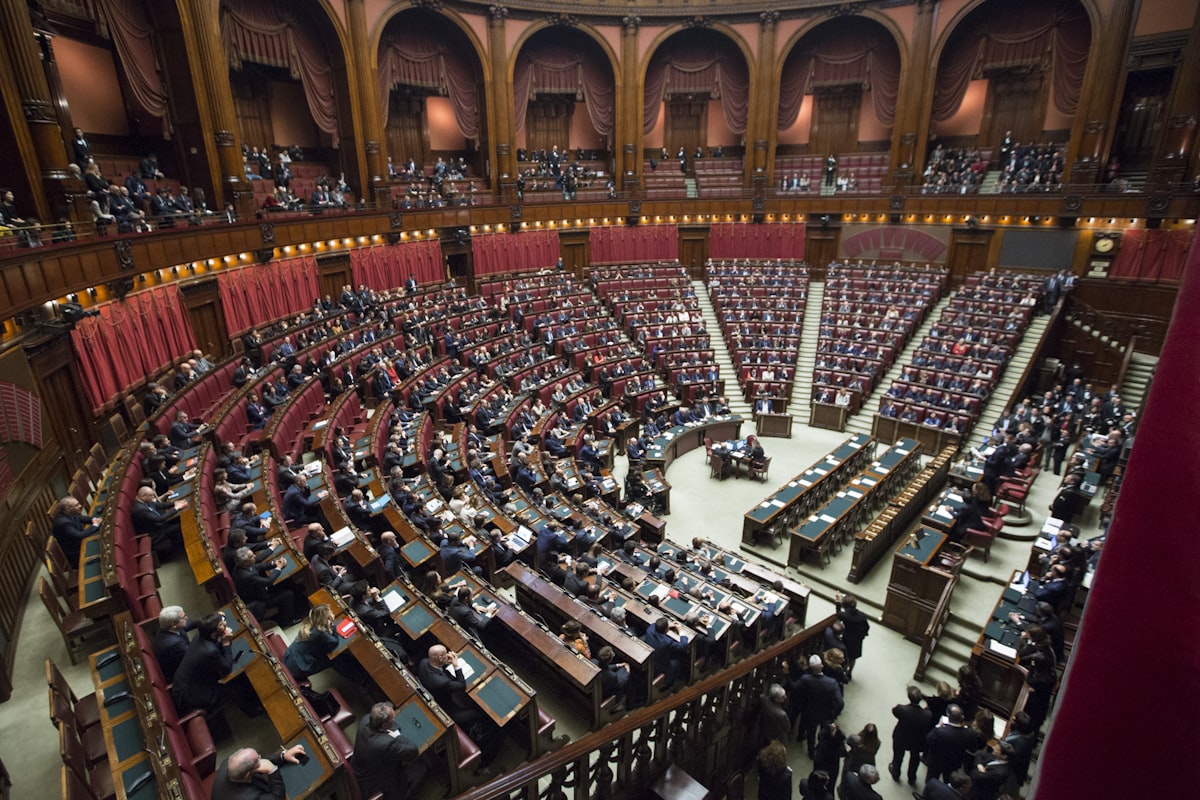
Anthropic has formed a political action committee ahead of the 2026 midterm elections, marking a significant escalation in the company's political engagement strategy. The PAC will direct funding to candidates aligned with Anthropic's policy positions on AI regulation, safety standards, and government AI adoption.

D.O.T.S AI Newsroom

D.O.T.S AI Newsroom

AI News Desk

3 min read
Anthropic Is Now a Political Player — New PAC Will Back Candidates Who Support Its AI Agenda

Anthropic has established a political action committee — a formal entry into direct electoral politics that marks a meaningful shift for a company that has until now relied primarily on direct lobbying, regulatory comment submissions, and informal government engagement to advance its policy positions. The PAC will be active in the 2026 midterm cycle, targeting congressional races where AI policy is a relevant factor.

What This Signals

The creation of a PAC is a statement about how Anthropic reads the current political environment. The company has been among the most vocal major AI labs on the need for thoughtful regulation — a position that aligns it with a particular slice of the legislative landscape but puts it at odds with other industry players who have pushed for minimal government intervention.

Direct electoral engagement through a PAC gives Anthropic a mechanism to reward legislators who champion its preferred regulatory framework and to build relationships with incoming members before they've formed fixed views on AI policy. It's a move that OpenAI, Google, and Microsoft have all made at various points, but that marks a coming-of-age moment for Anthropic's political maturation as an institution.

The Policy Agenda

Anthropic's stated policy positions center on mandatory safety evaluations for frontier AI models before deployment, government funding for AI safety research, liability frameworks that create incentives for responsible development, and structured mechanisms for government access to frontier AI capabilities in national security contexts — the last being particularly live given the company's ongoing legal dispute with the Trump administration over Pentagon access to Claude.

The PAC structure allows Anthropic to make independent expenditures on advertising and direct contributions to candidate committees within campaign finance limits. It does not create unlimited spending capability — that would require a Super PAC — but it does create a formal and transparent mechanism for directing political spending that goes beyond the informal relationships and lobbying expenditures that have characterized Anthropic's Washington engagement to date.

The Midterm Context

The 2026 midterms arrive at a pivotal moment for AI legislation. The EU AI Act's full implementation is creating pressure on US policymakers to establish domestic equivalents. Several state-level AI bills have created a fragmented regulatory patchwork that industry broadly prefers to resolve at the federal level. And the Trump administration's executive orders on AI — which have taken a substantially lighter-touch approach than the Biden-era framework — are creating uncertainty about the durability of current federal policy. Anthropic's PAC entry suggests the company wants to shape what comes next.

Back to Home

Related Stories

Musk Updates His OpenAI Lawsuit to Route Any $150 Billion Damages Award to the Nonprofit Foundation
Policy

Musk Updates His OpenAI Lawsuit to Route Any $150 Billion Damages Award to the Nonprofit Foundation

Elon Musk has amended his lawsuit against OpenAI with a strategic addition: any damages recovered — potentially up to $150 billion — should be redirected to OpenAI's nonprofit foundation rather than awarded to Musk personally. The update reframes the litigation from a personal grievance into a structural argument about OpenAI's obligations to its original charitable mission.

D.O.T.S AI Newsroom
OpenAI's Child Safety Blueprint Confronts AI's Role in the Surge of Child Sexual Exploitation
Policy

OpenAI's Child Safety Blueprint Confronts AI's Role in the Surge of Child Sexual Exploitation

OpenAI has released a Child Safety Blueprint outlining its approach to detecting, preventing, and reporting AI-generated child sexual abuse material. The document arrives as law enforcement agencies globally report a sharp increase in CSAM volume, with AI tools enabling the production of synthetic material at scale. It is the company's most detailed public statement on the problem it helped create.

D.O.T.S AI Newsroom
Anthropic's Claude Mythos Found Thousands of Zero-Days — So They're Not Releasing It
Policy

Anthropic's Claude Mythos Found Thousands of Zero-Days — So They're Not Releasing It

Anthropic has quietly restricted its most capable new model, Claude Mythos, after the system autonomously discovered thousands of critical vulnerabilities in major operating systems and browsers — including a 27-year-old OpenBSD bug and a 16-year-old FFmpeg flaw. The model is being deployed exclusively through Project Glasswing with 11 vetted security partners. It is the most concrete case yet of an AI lab withholding a model because of genuinely demonstrated risk.

D.O.T.S AI Newsroom